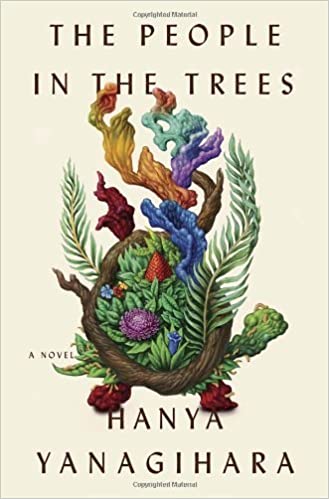

Hanya Yanagihara
Atlantic Books
London
2014
366 pages
According to the Art:
The novel explores the nature of illness and medical research, reasons perpetrators and their apologists can offer to reconcile pedophilia with normal behavior, the wisdom of pursuing medical technologies to extend age well beyond current limits, and whether the failing mind results from a disease process or the normal course of aging.
Synopsis:
The novel takes the form of a memoir written from prison. The fictional author is Dr. Norton Perina who was awarded the Nobel Prize in Medicine for discovering what caused some people on a remote Micronesian island to live for up to 250 years or longer. Dr. Ronald Kubodera, Perina’s long-time colleague, convinced him to write the memoir while he was in prison. Perina sent Kubodera a chapter at a time, which he would then “lightly edit” and add occasional footnotes to elaborate on a given section.
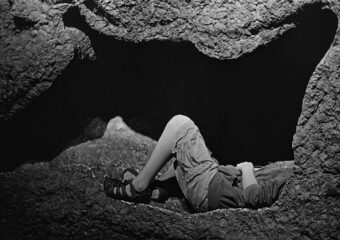
Perina is in prison for being convicted on “two counts of sexual assault,” (p. 349) though we can believe he is guilty of many more counts. All of these transgressions involved children, many of whom were under his care as their adopted father. However, the bulk of the memoir is not about the behavior that lands him in prison. Instead, it tells of Perina’s successful scientific investigations of a hidden people in a secluded partition of an unknown island in Micronesia. He came to this place while stumbling around for a career direction after medical school, and then came to discover the hidden people when stumbling upon one lying on the forest floor.
Perina eventually linked the consumption of the meat of a particular turtle on this island to a prolongation of life measured in hundreds of years. Only the inhabitants who reached around 60 years were given the turtle meat and only during a ceremony to mark the milestone. While the bodies of these people remained as they were physically when they consumed the turtle meat, their minds did not. As they aged they became non compos mentis—“all they could do was jitter and babble and laugh at nothing, the neighing laughter of the brainless.” (p. 95) Perina’s published papers called attention to a possible fountain of youth and produced the expected rush among pharmaceutical companies to distill the turtle’s magic into a pill. All they managed to do instead was to destroy the island’s habitats, corrupt its people, and hunt the turtles into extinction.
Very little is said in Perina’s memoir about any activities leading to his pedophilia conviction until the very end; however, occasional hints that Perina could be a pedophile appear before then. At one point in particular he describes an encounter with a ten-year-old boy from the village that might have awakened any such tendencies that had been dormant. Another time he admits “some of the only comfort (and certainly the only amusement) I’d found had been with the village’s children.” (p. 267). During subsequent trips to the island over the next few decades, Perina adopted 43 island children and brought them home to raise as his own. He was drawn to children, but in not so innocent a manner. Only at the very end of book, and only in the postscript, do we get any details about how he preyed upon these children.
Analysis:
Yanagihara’s novel is fantastical in all its aspects. Yet, she based it on the real life story of Daniel Carleton Gajdusek. He was a Nobel Prize winner for his work on a disease discovered among people on a remote island. He, like the fictional Dr. Norton Perina, adopted scores of island children and was eventually convicted on charges related to child molestation. In an interview with Publisher’s Weekly in 2013, Yanagihara described how she came across Gajdusek’s story and how she just couldn’t let it go.
I grew up knowing about Daniel Carleton Gajdusek, the doctor upon whom Norton is based. He was one of these larger than life figures who was always hovering over my childhood. My father is a research doctor and he was fascinated by Carleton so I always knew his story, and I always thought he was far too good of a character to squander to time.
Three components of this novel should draw the attention of readers interested in literary accounts of illness and medical research: the reasons perpetrators and their apologists can offer to reconcile pedophilia with normal behavior; the wisdom of pursuing medical technologies to extend age well beyond current limits; and whether the failing mind should be considered the result of a disease process (dementia) or the normal course of aging (senescence).
Once Perina’s urges were awakened he began to contrive justifications for them. He cited cultural relativism and how his time on the island taught him “that all ethics or morals are culturally relative.” (p. 171) This made the island ritual involving the village chief and eight other men sodomizing a ten-year-old boy to “instruct boys in the ways of lovemaking” seem “perfectly reasonable.” (p. 169) He observed rampant sexual promiscuity among all ages of people on the island, including children, and concluded from those observations that it was “wholly natural” for the children. (p. 168) How could pedophilia be wrong when there are no absolute cultural prohibitions, it’s educational for children, and they like it?
While in prison, Perina begins to wonder that if pedophilia is wrong, is it so wrong that it can’t be excused by all the love and support he gave to his adopted children? Kubodera, his apologist and apparent lover as well as his editor, further wonders how it is that Perina can’t be excused based on his accomplishments as a scientist. Yanagihara is asking readers to consider whether there is any amount of personal goodness or professional greatness that can overcome the evil of pedophilia. It’s not a hard question, but it is a hard read. She has another go at sexual violence in a much more brutal and forceful way in her next novel, A Little Life, reviewed here.
Yanahighara’s depiction of the pharmaceutical industry rush to isolate and commercialize the turtle meat constituent that extends longevity was an obvious story line to pursue given current efforts to find such a potion. She probes the wisdom of this pursuit by showing how it can lead to annihilation and extinction, and how it can produce a group of people wishing their lives were shorter, not longer.
Yanahighara may also be asking us to consider how we think about dementia. The turtle meat preserves the physical abilities and functions of those who receive it into extreme longevity while their mental capacities erode almost completely away. But,Yanagihara never refers to the diminished mental capacities of the island people as “dementia.” She never really calls it anything. What happens is just the senescence in mental functions that would have been accompanied by a senescence in physical capabilities had the turtle meat not prevented them from deteriorating in correspondence with one another. Whether intended or not, Yanahigara reminds us that a debate exists about whether loss of mental functions with age is the result of a disease or the process of aging itself.
Also:
Ann Patchett explores the wisdom of extending fertility well into old age in her novel, State of Wonder, which is reviewed here.
A version of this review is posted on the NYU Literature, Arts and Medicine Database.