Eat Your Ice Cream
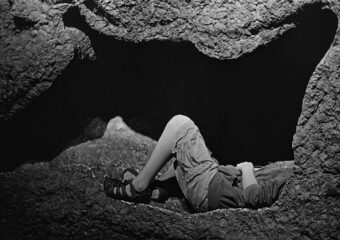
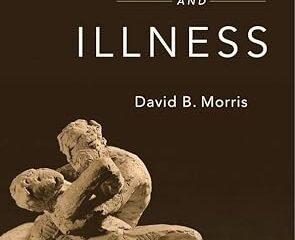
According to the art: A major conceit of the book is that if we are to incorporate all the recommendations for achieving good health into our lives, some tradeoffs will be necessary.
The posts in What These Works Say comprise reviews and analyses of works from the Humanities selected for their focus on illness experiences beyond what biomedical sources typically provide. The works selected address both the experience of illness diseases and disorders cause (e.g., pain, disability, disorientation), and related challenges (e.g., health care access, psychological manifestations, relationship disruptions). The posts consist of three sections: 1) a brief take on the key perspectives the work offers about disease and illness (According to the Arts); 2) a summary of the whole work (Synopsis); and 3) how the work renders, explains, or expands on the illness experiences or disease processes it covers (Analysis).
According to the art: A major conceit of the book is that if we are to incorporate all the recommendations for achieving good health into our lives, some tradeoffs will be necessary.
According to the art: Shannon Vallor uses the metaphor of a mirror to reveal how AI reflects and distorts our shared humanity.
According to the art: The essayist Michel de Montaigne tells of the excruciating pain of his kidney stones but also how be benefitted from them in certain ways; a notion not likely shared by any of those who have experienced them. This post is a remastered version of a post from March, 2024.
According to the art: When we have reached a certain age, we can find that we easily pick up where we left off with friends we knew well, for a short time, a long time ago. Almodóvar asks what will we still do for them?
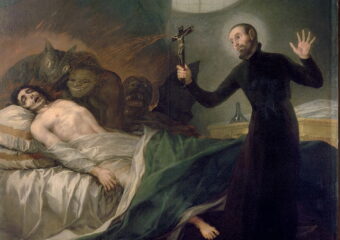
According to the Art: The story centers on a twelve-year old girl set in late 1700s’ Columbia, who was bitten by a presumably rabid dog. Her subsequent course prompts thinking about how more than only medical professionals and institutions should be held accountable for iatrogenesis.
According to the art: The author wants to “cross restrictive boundaries” between medical logos and medical eros so that desires connected to specific health problems can be recognized, reconciled, and remediated.
According to the art: In considering how we should respond to the Covid-19 pandemic and harms produced from environmental destruction and digital capitalism, O’Siadhail, through his poetry, asks that we consider more than just what lessons we have learned, and consider what we should desire.
According to the art: The book is a graphic memoir covering MK Czerwiec’s time mostly as a nurse in the HIV/AIDS unit at Illinois Masonic hospital in Chicago, Illinois from 1994 until 2000 when the unit closed. It provides personal context for one of the most serious and complex medical calamities in decades, and in a form that adds value to conventional forms of biomedical texts and teachings.
According to the art: National Museum (Oslo) art curator and Munch expert, Øystein Ustvedt, brings together art history and Munch’s biography in explaining how his work depicts both emotional and subjective aspects of the human condition, to include illness and its consequences.
According to the art: The book is classified as a memoir, and while it has the elements of a memoir, Leland crosses seamlessly into other genres, such as history, philosophy, political science, and long-form journalism. He plunges into the country of the blind, which for him is a “teeming variety of their stories of struggle, adaptation, and adventure.”