Amour
Love and Immutable Boundaries
According to the art: This movie asks viewers to consider the boundaries of love (amour), or even if there are any when it comes to ending the suffering of a deeply loved spouse.
The posts in What These Works Say comprise reviews and analyses of works from the Humanities selected for their focus on illness experiences beyond what biomedical sources typically provide. The works selected address both the experience of illness diseases and disorders cause (e.g., pain, disability, disorientation), and related challenges (e.g., health care access, psychological manifestations, relationship disruptions). The posts consist of three sections: 1) a brief take on the key perspectives the work offers about disease and illness (According to the Arts); 2) a summary of the whole work (Synopsis); and 3) how the work renders, explains, or expands on the illness experiences or disease processes it covers (Analysis).

According to the art: This movie asks viewers to consider the boundaries of love (amour), or even if there are any when it comes to ending the suffering of a deeply loved spouse.
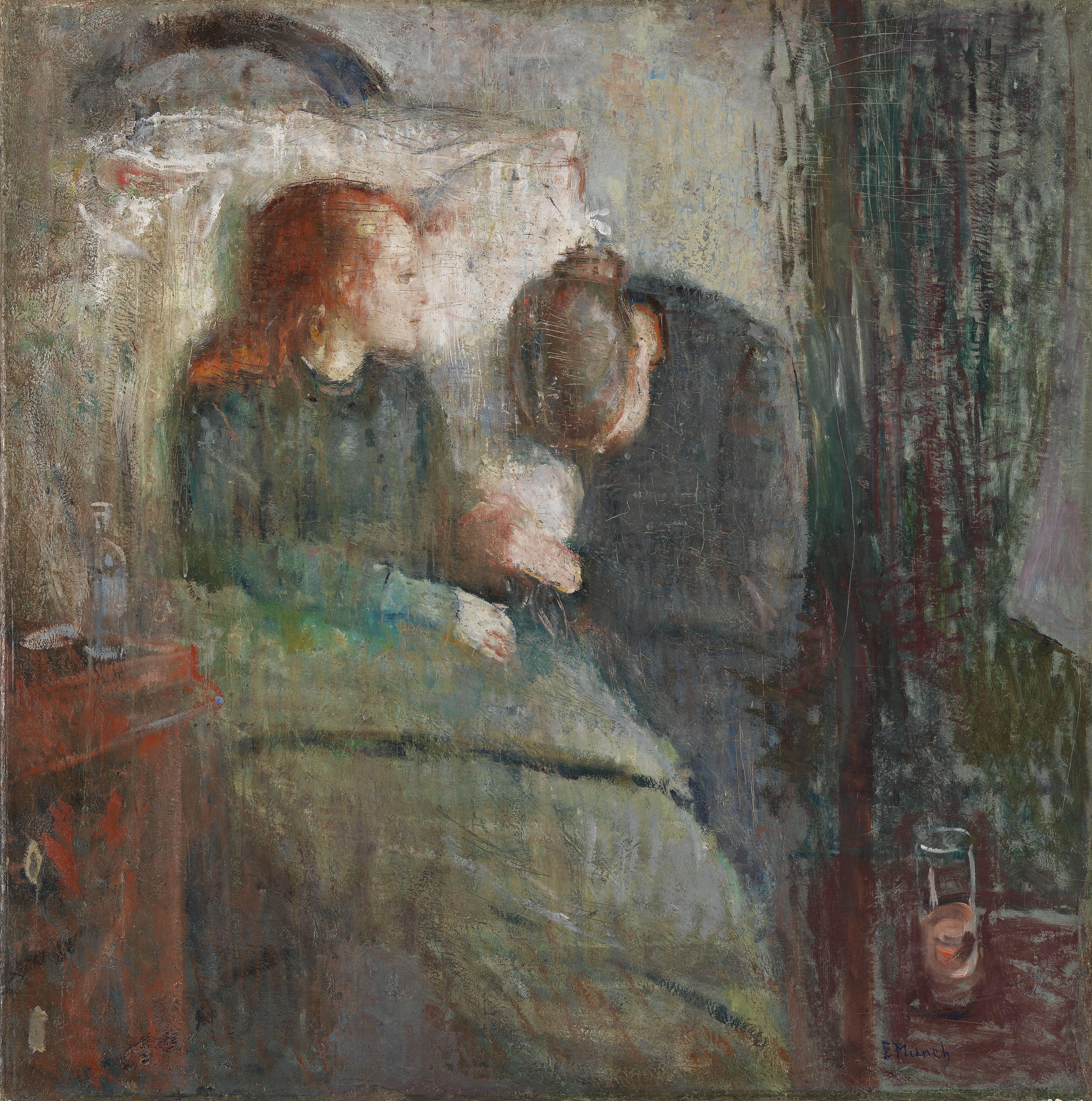
According to the art: The Norwegian, expressionist painter Edvard Munch saw a lot of illness and death in his family. In this painting, he shows us a moment preceding the death of his sister while she is attended to by a distraught aunt. He may also be showing us his sister consoling their aunt.

According to the art: At its core, this novel is about money and health care, and in particular about whether money should ever be an object in health care decisions for patients. Running through the novel is a theme of illness as loss, as it takes different forms: financial loss, loss of control, loss of self, loss of relationships, and loss of meaning.

According to the art: The book is a memoir based on seventeen near-death events involving the author, and in a few instances, her children. Though the events make for harrowing and interesting tales, they are written such that they also convey what it’s like to nearly die from different acute illnesses, accidents, violence, and bad judgment. Collectively, the stories show the availability of human resilience in the face of repeated threats to life.

According to the art: In this literary memoir of his opium addiction, Thomas De Quincey writes of the pleasures and pains opium brought him over an eighteen–year period during the early 1800s. His experiences foretell journalistic accounts of the opioid addiction crises that occurred two hundred years later.

According to the art: Sandeep Jauhar describes a select set of historical events that tend toward the triumphant while leaving aside some of the reversals and catastrophes that have historical importance. His views of future advances in cardiology are pessimistic even as cellular and gene therapies are moving into clinical trials at the time he writes this book.

According to the art: This book is a journalistic account of causes and consequences of the opioid crisis in the U.S. during the first two decades of the twenty-first century. The analysis considers social factors, opioid supply chains, and responses of health care professions, criminal justice systems, advocates, regulators, and legislators.

According to the art: The play endeavors to show the raw effects of mental deterioration on aging people and those who are connected to them without having to see them through the obscuring and distorting effects of medicalization. More is thus revealed about the family dynamics in these circumstances and about the robustness of the human spirit.