
Michael Pollan, long known for his writing on food and nutrition (e.g., The Omnivore’s Dilemma), changed course to psychedelics with the 2018 publication of his book, How to Change Your Mind. He was drawn to psychedelics because “after several decades of suppression and neglect, psychedelics are having a renaissance,” (p. 3) and he decides to tell “the story of this renaissance” (p. 4). His approach applied “investigative journalism,” that is, trying the psychedelic experience himself. His investigation made him realize that psychedelics alter consciousness, and sent him on a path for understanding it.
The book became, unwittingly it seems, the first of a trilogy ultimately concerned with what conscious is and does. The second book, This is Your Mind on Plants (2021), extends Pollan’s project to three mind-altering compounds found in plants: opium, caffeine, and mescaline, and the third, A World Appears (2026), is his attempt to discern consciousness itself. Here I cover Pollan’s investigation into consciousness across the three books, the results of which frustrated him and required a reconciliation.
The Trips Begin
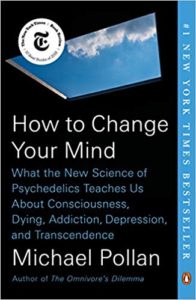
In How to Change Your Mind, Pollan gives a brief summary of the bumpy history of psychedelics. He recounts how the intense and well-supported interest in them as therapeutic agents during the 1950s was almost completely snuffed out in the 1960s when “a moral panic about LSD engulfed America, and virtually all psychedelic research and therapy were either halted or driven underground.” (p. 185) The panic reached its apogee when counterculture movements and their leaders, among them Timothy Leary of “turn on, tune in, drop out” fame, were seen as threats to mainstream society in general. The few remaining embers, though, reignited in the 1990s and by 2006 serious interest in psychedelics revived and research into clinical use resumed through legal means. Structures were in place allowing psychedelic use for specific purposes, opening the way for Pollan’s investigation.
Pollan arranged three separate “trips,” one each for the psychedelics LSD, psilocybin, and 5-MeO-DMT (i.e., “The Toad”). He carefully chose a tour guide for each one. He came through these sessions with what he interpreted as a dissolution of his ego, which made more room for his consciousness: “I was present to reality but as something other than my self.” (p. 264) After these experiences and interviews with many scientists, psychologists, counselors, and users, Pollan constructed an argument about how the altered consciousness states psychedelics produce can offer benefits to individuals who are healthy or sick, and to societies that are stable or fractious, by sending “a life or culture down a new path.” (p. 407) He is inspiring, vague, and fantastical at times; he gets more so in his follow-up book, Your Mind on Plants
There’s No Place Like Home
Pollan expands his investigation of consciousness-altering substances by marrying it with his passion for plants and gardening. Therefore, he need not look further than his kitchen and garden for sources serving his interest at this stage: opium (poppy), caffeine (coffee and tea), and mescaline (San Pedro cacti). He explained his rationale for choosing these three mind-altering agents:
Taken together, these three plant drugs cover much of the spectrum of the human experience of psychoactive substances, from the everyday use of caffeine, the most popular psychoactive drug on the planet; to the ceremonial use of mescaline by Indigenous peoples; to the age-old use of opiates to relieve pain. (p. 4)
Pollan received guidance and supervision for his trials of opium and mescaline. As a self-described “heavy caffeine user,” he withdrew from it by giving up coffee and tea, thinking he could make inferences about caffeine effects through reverse engineering the experience.
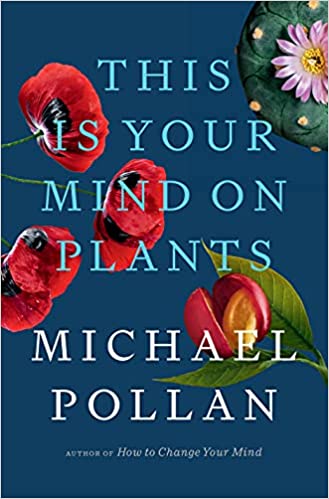
While Pollan describes the effects these three agents had on his consciousness, he went further morphing from his role as an investigative journalist into roles of historian and anthropologist. Pollan covers how opium, caffeine, and mescaline altered the consciousness of millions of people through the millennia, and in doing so, says they figure in world history and human development, often in rather breathtaking terms. Opium spurred “the Romantic revolution in poetry.” (p. 31) “Caffeine was the perfect drug not only for the age of reason and the Enlightenment but for the rise of capitalism, too.” (p. 119) “The sins of slavery and imperialism, in a global system of production…could only have been fueled by caffeine.” (p. 138)
While he does not credit mescaline with having contributed to human progress in such grand scales, Pollan speaks of its power in healing the most devastating wounds. But insofar as affecting consciousness, for him, mescaline does “what all psychedelics do—not so much change how we feel inside as imbue the world around us with never-before-appreciated qualities.” (p. 217)
Pollan may have imbibed too much caffeine while writing this book judging from some of the conclusions he makes, but it may have fueled his subsequent quest to understand just what consciousness is rather than just what it does to his mind and its impact on world history. What he found on this quest, or more appropriately, what he didn’t find, became the basis for his next book, A World Appears.
Pollan Trips into a Cave
If psychedelics and mind-altering plants can change consciousness, then, as Pollan surmises in describing his objective with A World Appears, “consciousness is, at its core, a material phenomenon…[or there is] at least some credence to the idea.” (p. xx) So off he goes on more trips, this time to experts working on finding a discernible form of consciousness, a trip that in the end fails, but still produces some value towards the way we think about artificial intelligence.
Pollan’s trips takes him to four ports of call, or “four different dimensions of consciousness.” (p. xxxi) His first stop is “sentience,” which refers to consciousness as where in living beings sensations are perceived and responses to them generated. The next stop is “feelings,” the awareness of biological phenomena, the communication link between the body and the mind, serving homeostasis, for example. “Thought” is Pollan’s third stop, accounting for “the stream of thoughts that all of us experience every waking moment.” (p. xxxii) His trip ends at “self,” or the ’I’ that takes in all of our experiences.
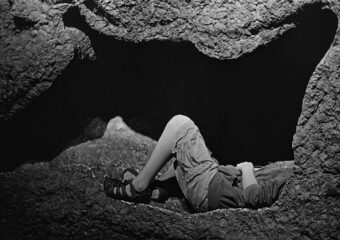
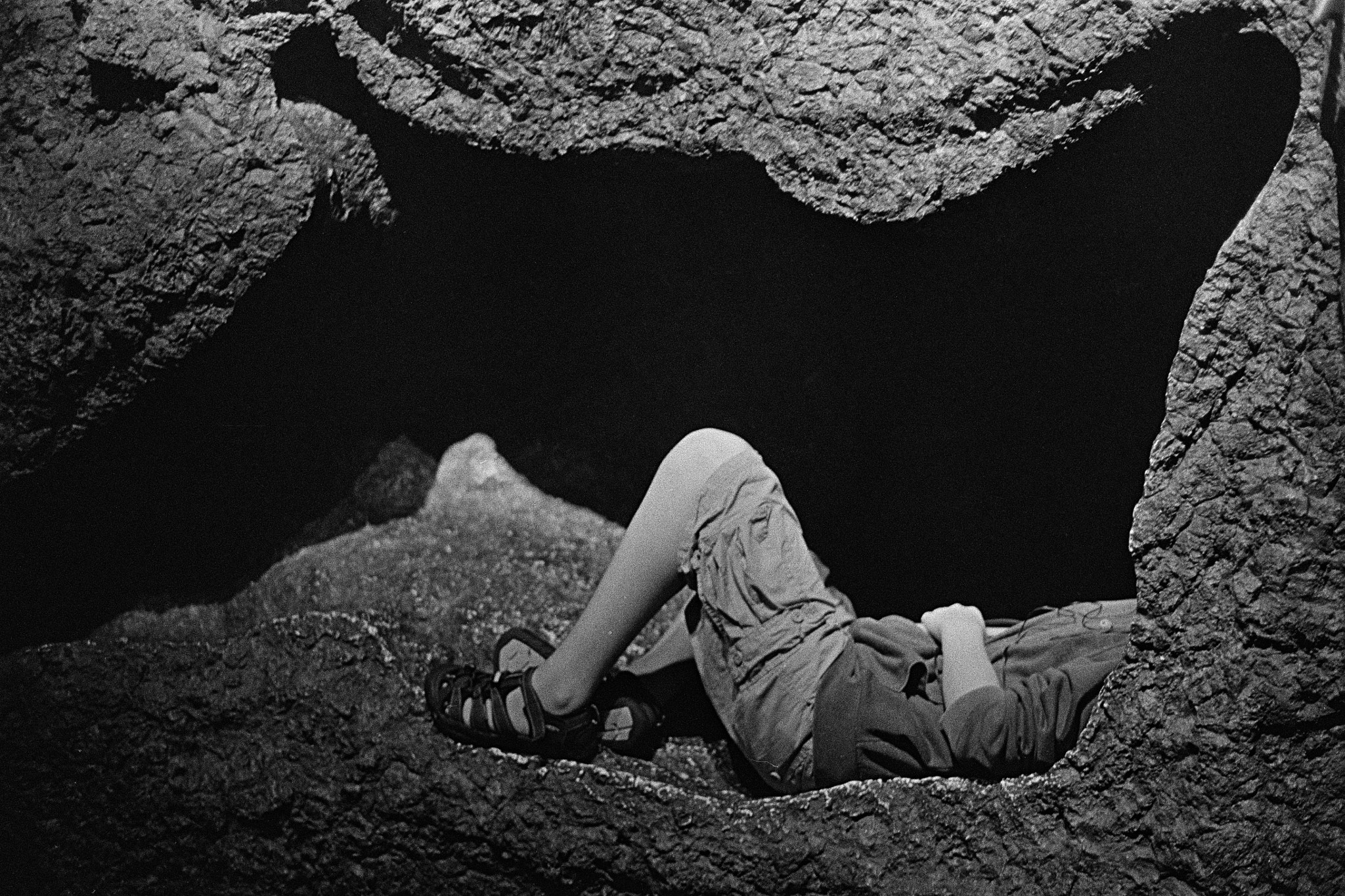
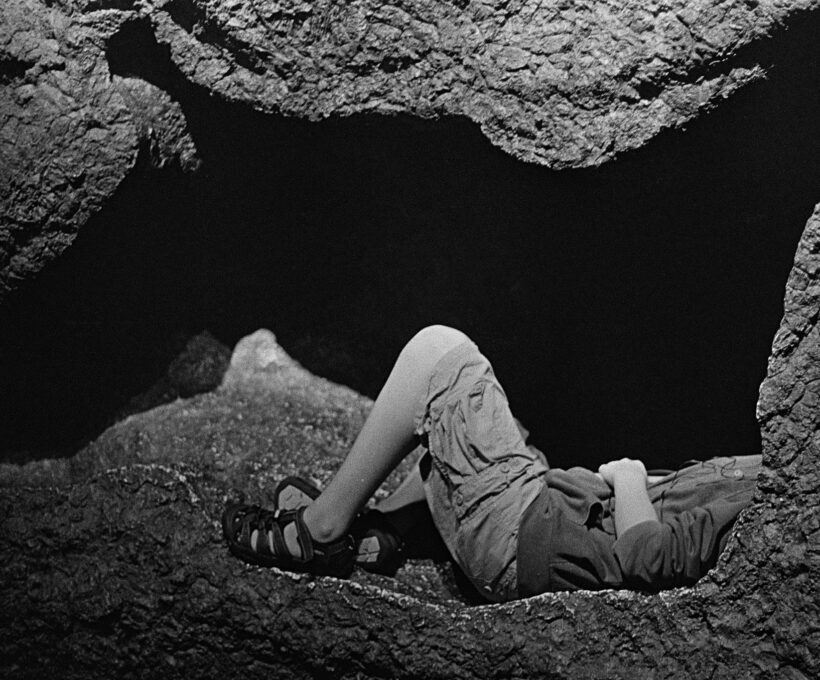
Each trip constitutes a chapter comprising what is known about consciousness from a particular dimension. Pollan describes and evaluates them with the help of people involved in their development. Across the four dimensions, he consults or references a wide range of experts including among others: neuroscientists, physicists, biologists, philosophers, psychologists, screenwriters, novelists, poets, and Buddhists. He combs through their theories, constructs, data, analogies, stories, and metaphors. Pollan, nevertheless, comes up empty, and is “abashed to say I know less now than I did when, naively, I set out to unravel the mystery of consciousness.” (p. 225) It took several days in a cave at a Buddhist retreat high in the mountains of New Mexico for Pollan to reconcile with this outcome, “to let go into not-knowing.” He wound up accepting consciousness “as less a scientific or philosophical puzzle to be solved and more as a practice…Consciousness is a miracle, truly, and remains the deepest of mysteries.” (p. 239)
So be it, but what then are we to make of the artificial intelligence industries’ determined attempts to discern or integrate consciousness in their machines? Pollan might say they will need a miracle.
Citations:
Pollan M. How to Change Your Mind. Penguin Books; 2019. 464 pages.
Pollan M. This Is Your Mind on Plants. Penguin Press; 2021. 288 pages.
Pollan M. A World Appears: A Journey into Consciousness. Penguin Press; 2026. 320 pages.
Links:
My blog post elaborating on Pollan’s How to Change Your Mind is here, and on Your Mind on Plants is here.
Along with cohost, Dan Albrant, here’s a link to our podcast episode in which we focus on: consciousness, spirituality, and mysticism as what is at work in the effects psychedelics produce, and how they may delineate limits to biomedicine (rational or not), that is, how they brighten or blur the line between classic biomedicine and whatever isn’t.
Edited by Lucy Bruell.
Web Image: Cave Man, Tim Brown, CC BY 3.0 https://creativecommons.org/licenses/by/3.0, via Wikimedia Commons