
While the prospect of entering old age, say beginning when we hit seventy, comes with some serenity, so too does it come with fear. Those of this age group have seen the ravages and indignities that could befall themselves having witnessed the experiences of their families and friends, as well as their exposures to cultural and social representations (movies, novels, art, TikTok, Facebook). Their fear ranges from mild concern to outright panic, and their reactions range correspondingly. Those with mild to moderate fear might take up exercising or some brain work, see their doctors regularly, and adopt wearables. Those in utter panic will consider much more drastic actions. In all cases, the reactions to these fears boil down to fighting destiny.
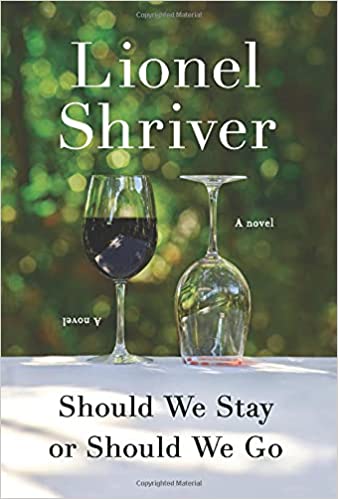
Lionel Shriver, in her novel, Should We Stay or Should We Go, takes on the case of the panicked, and imagines what they might be willing to do to avoid the horrors that can attend old age and how their actions could turn out. She does this through the story of Cyril and Kay Wilkinson.
The Pact
Cyril Wilkinson and his wife Kay make a pact. On Kay’s eightieth birthday, when Cyril is already eighty-one, they will commit suicide together. Cyril, a physician in the British National Health Service (NHS) secured a supply of secobarbital as the means to their end. It was 1991. They have planned well ahead; another twenty-nine years will pass before Kay’s eightieth in 2020.
Motivating the pact was the death of Kay’s father after “a good four years of steady deterioration, followed by a solid ten of nothing but degradation” from dementia. (p. 7) Kay recalls “how he was physically so unpleasant,..managing the nappies alone was such a trial, because he fought and kicked a great deal, and sometimes, which was mortifying, got a soft little erection—honestly, my own father.” (pp. 2-3) Then “the chasing and corralling and undressing…I was halfway between a daughter and a sheepdog. And in between these and many like events, pictures of Kay’s father kept popping up in her head, such as one showing him “naked below the waist, purple with rage, and covered in feces.” (p. 9)
They had just arrived home from his funeral service and were reflecting on what they had been through. At one point, Cyril says, “Your father frankly made me suicidal—or homicidal—or both. Half an hour in his presence passed like a mini ice age,” and then promises Kay, “I will do almost anything to keep the two of us from acceding to such a fate.” (p. 12) Kay is dubious.
That’s what everyone says…Everyone looks at what happens to old people and vows that it will never happen to them…Somehow they’ll do something so their aging will proceed with dignity…Everyone thinks they have too much self-respect to allow a stranger to wash their private parts…Then it turns out that, lo and behold, they’re exactly like everyone else! And they fall apart like everyone else, and finish out their miserable end of their lives like everyone else. (pp. 12-13)
Cyril counters, “in order to retain agency over your own end of life, you have to be willing to give up some small portion of it that’s not particularly rubbish.” (p. 31) But, he admits the plan amounts to “placing a high-stakes wager.” (p. 32) Kay dithers over the next few months, but then her mother begins showing signs of dementia; “I’m all in,” she tells Cyril. (p. 17)
The Pact Wobbles
Cyril and Kay proceed through the subsequent twenty-nine years, with Kay raising their three children, retiring, finding new work and passions; Cyril going on and on about politics, the NHS, old people; and both watching their remaining parents pass on, traveling to far-flung locations, becoming grandparents, aging. Then the day arrives; happy birthday, Kay?
The four years preceding Kay’s eightieth birthday overlap both the decision of the United Kingdom (UK) to leave the European Union (“Brexit”) and the Covid-19 pandemic. Thus, during the time Cyril and Kay are beginning to wonder whether they will actually leave or remain on Earth, the UK is deciding whether to leave or remain in the European Union. And while Cyril and Kay are seemingly willing to die rather than fight the ravages of old age, millions of people are willing to fight the ravages of Covid-19 rather than die. These juxtapositions pop up often giving the Wilkinsons’ decision added poignancy, and play a part in their newly manifesting doubts about the pact as the established date of its execution nears.
At this juncture, Shriver conjures twelve different endings that still take the form of high-stake wagers. Through these alternative paths, we see if the wagers are well placed. We also gain insights on common and contemporary issues concerning aging, as well as on some hypothetical and futuristic possibilities. Among them are these:
- The surprises still left between people after more than forty years of marriage
- The possibility of a person with dementia as happy
- Whether being sensible and prepared for old age is always rewarding
- The prospect of outliving enjoyment, purpose, or interest in life
- What life might be like when a drug reverses aging and makes elderly people twenty-five years old again, forever
- Elder abuse within an institution and within a family
- The adventurousness and desperation people approaching old age can exhibit
Though each of the alternative endings comprise individual chapters, they are not wholly independent of one another as they each borrow ideas, paragraphs, dialogs, and sentences from the others. Some of them peel off into separate tales. Shriver does not limit these through lines to just those within the book. In one case Shriver samples another of her books, So Much For That, and in another, she riffs on an American in England who bloviates on BBC 4 and in a widely-circulated newspaper, who happens to be Shriver in real life. These interminglings make for more dynamic prose, and add some coherency to all the different alternatives presented.
Destiny’s Grandparents
Though each of the alternative endings comprise individual chapters, they are not wholly independent of one another as they each borrow ideas, paragraphs, dialogs, and sentences from the others. Some of them peel off into separate tales. Shriver does not limit these through lines to just those within the book. In one case Shriver samples another of her books, So Much For That, and in another, she riffs on an American in England who bloviates on BBC 4 and in a widely-circulated newspaper, who happens to be Shriver in real life. These interminglings make for more dynamic prose, and add some coherency to all the different alternatives presented.
When Kay is arguing against the pact, she tries to impress upon Cyril that destiny has a part in what becomes of them, and that they cannot control all of it. “Our destiny isn’t wholly in our hands. I realize you don’t like that about the world, but there’s an upside: our destiny isn’t wholly our responsibility, either. Or, if we end badly, our fault.” (p. 241) Shriver emphasizes the point by making destiny a component of each alternative path they take. Destiny can’t be completely controlled, so embrace it, or at least accept it, Shriver may be saying.
As they did with their original plan for Kay’s eightieth, the Wilkinsons would have to wager that the outcomes of any of their alternative paths would be more preferable than the status quo. Kay acknowledges that this reality has been the case throughout their life when she asks Cyril, “every decision we make is a gamble, isn’t it?” (p. 202) So, why not give them a go?
The pact Cyril and Kay make can seem brave, but Shriver is not having it, and especially not when compared to the bravery needed in old age. “Real bravery and nobility,” Kay tells Cyril, “entail losing everything you love by degrees like everyone else, and taking what comes like everyone else, and dying when you least expect it and when you don’t want to, like everyone else.” (p. 75) “Buck up,” Shriver could have added.
We should stay: it’s destiny, with risks, be brave, eat your ice cream.
Notes
This posting is a remastered version of an earlier post.
Should We Stay or Should We Go
HarperCollins, 2021: 266 pages
ImageCredit
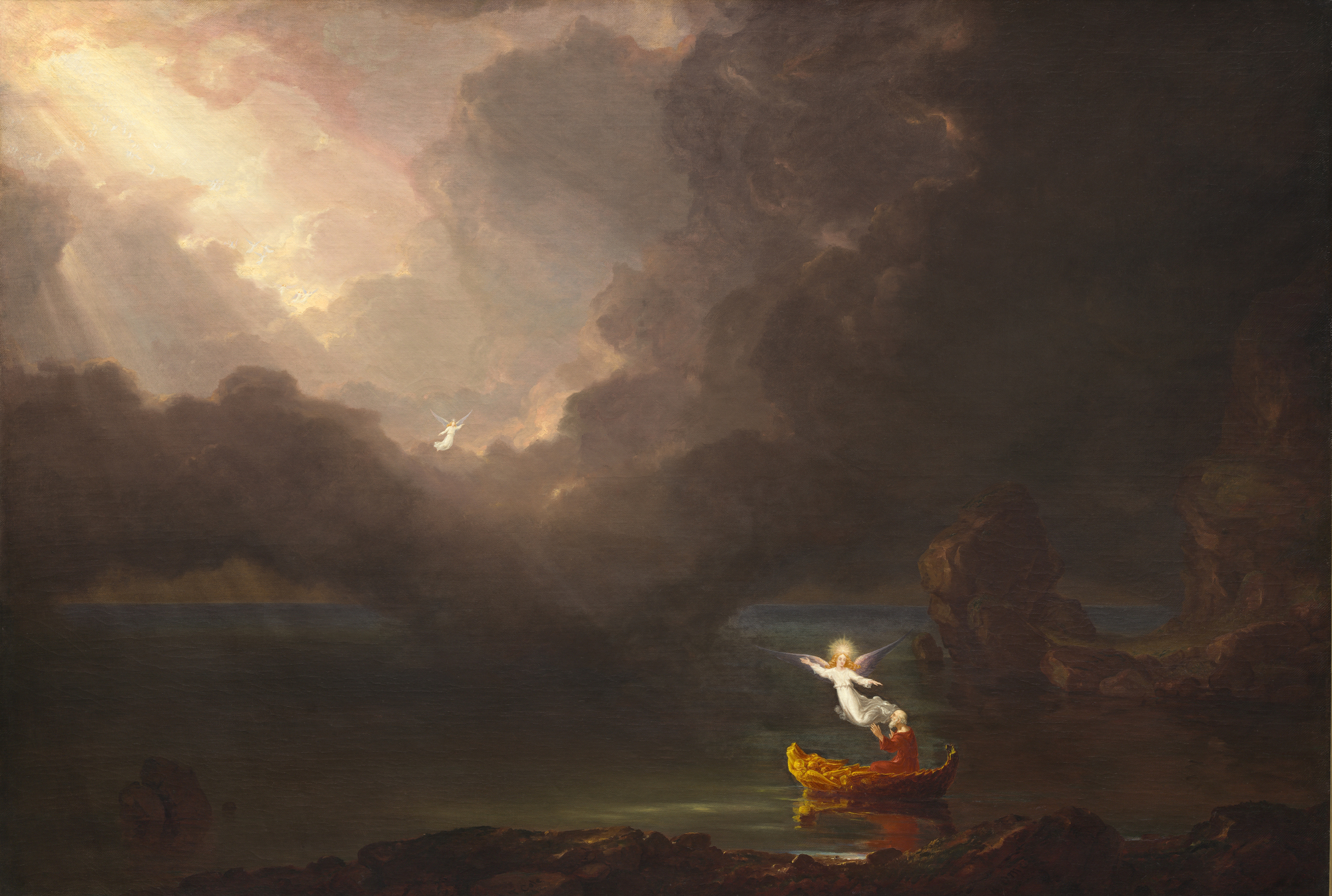
Title: The Voyage of Life: Old Age
Artist: Thomas Cole, 1842
Source: Obelisk Art History, Public domain