T.B. Harlem
According to the art: Alice Neel’s painting portrays the illness experience of tuberculous (TB) in 1940, and also conveys social determinants (poverty, malnutrition) that puts populations at risk for illnesses such as TB.
The posts in What These Works Say comprise reviews and analyses of works from the Humanities selected for their focus on illness experiences beyond what biomedical sources typically provide. The works selected address both the experience of illness diseases and disorders cause (e.g., pain, disability, disorientation), and related challenges (e.g., health care access, psychological manifestations, relationship disruptions). The posts consist of three sections: 1) a brief take on the key perspectives the work offers about disease and illness (According to the Arts); 2) a summary of the whole work (Synopsis); and 3) how the work renders, explains, or expands on the illness experiences or disease processes it covers (Analysis).
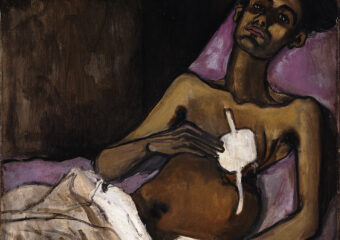
According to the art: Alice Neel’s painting portrays the illness experience of tuberculous (TB) in 1940, and also conveys social determinants (poverty, malnutrition) that puts populations at risk for illnesses such as TB.
According to the art: Through a series of astonishing case studies from her neurology practice, O’Sullivan shows what psychosomatic illness looks like and describes how it works. She avers that illnesses can arise from pathophysiological causes or psychosomatic mechanisms, and so diagnosticians should be sure to discern which is at work in any given case as much to prevent harm as to effect a cure.

According to the art: This movie was created to render the seizure experience of people with epilepsy.; the storyline is secondary to this aim. It also shows how filmmaking can be effective in capturing the seizure experience in ways that other art forms cannot.
According to the art: This novel covers a sixty–year span of a woman’s life and how the period during her husband’s early-onset Alzheimer’s disease affected the trajectory of her life as a spouse, a mother, a nurse, and a person with dreams and ambitions. Insights are offered on family relationships, daily life, and health care delivery and financing. How denial manifests and evolves is explored, and how grace can come to the fore is rendered.

According to the art: Alphonse Daudet was a nineteenth century French writer whose syphilis progressed to the late stages involving devastating neuropsychiatric effects. The book comprises notes he made about his experiences with pain, unsteadiness and paralysis, what chronic pain and illness does to personal outlooks, isolation, and relationships, and the pleasures and pains of morphine.

According to the art: Samantha Harvey endeavors to show the experience of Alzheimer’s dementia from early stages to end stages through a character’s life. She also imagines what it could be like for a person to realize they are progressing through dementia. The experience she imagines hinges on not just that memories and facts are unavailable, but that they can come back as independent agents to cause confusion, disorientation, and fear.

Through an interplay among set designs, lighting effects, repeated scene sequences, and time loops, this play gives the audience a sense of the dementia experience, not just a view of it. The audience at times has as much trouble as the character with dementia discerning fact from fiction, past from present, and here from there.

According to the art: This TV series portrays the health care a New York City hospital provided to its patients in the early 1900s.It shows that many of what were then considered important advances in society, culture, technology, and medicine, were later considered dangerous, unethical, barbaric, inhumane, and racist. The series asks whether all eras, including the era when it was created, are doomed to be seen in those ways in the future.

According to the art: Franzen looks back to describe his father’s experience with progressive dementia, while worrying that his memories may be unreliable––yielding a literary meta-analysis of failing memory through inherent memory failings. He thus questions whether memory loss with age is more natural than pathological.

According to the art: Through his main character, Mosley imagines what it could be like to experience dementia, and also to have a sense that you are experiencing it. He also challenges us to think about how dementia should be treated and about access to experimental drugs without regulatory oversight.